SPARC
Sustainable Purification & Agricultural Runoff Control
A student project from Meerut, India
Follow the water down.
Scroll to travel through a system that cleans what a wetland leaves behind.
Start at the drainThe drain
The drain.
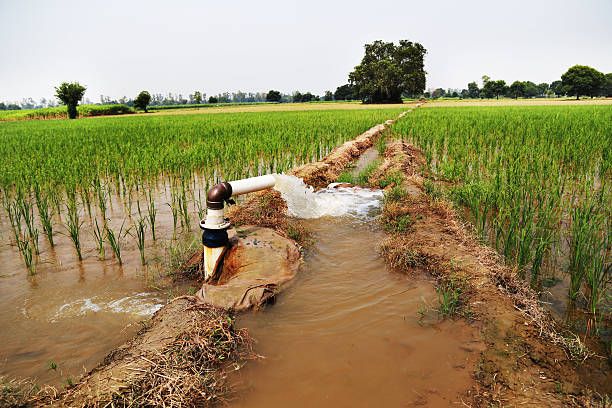
Twenty minutes from our school is a village called Chhilora. It has no drainage channel at all. Every time a field is watered, the fertiliser and pesticide the crop did not absorb washes into the shallow water that hand pumps draw from, and into the village pond.
What that does
What that does.
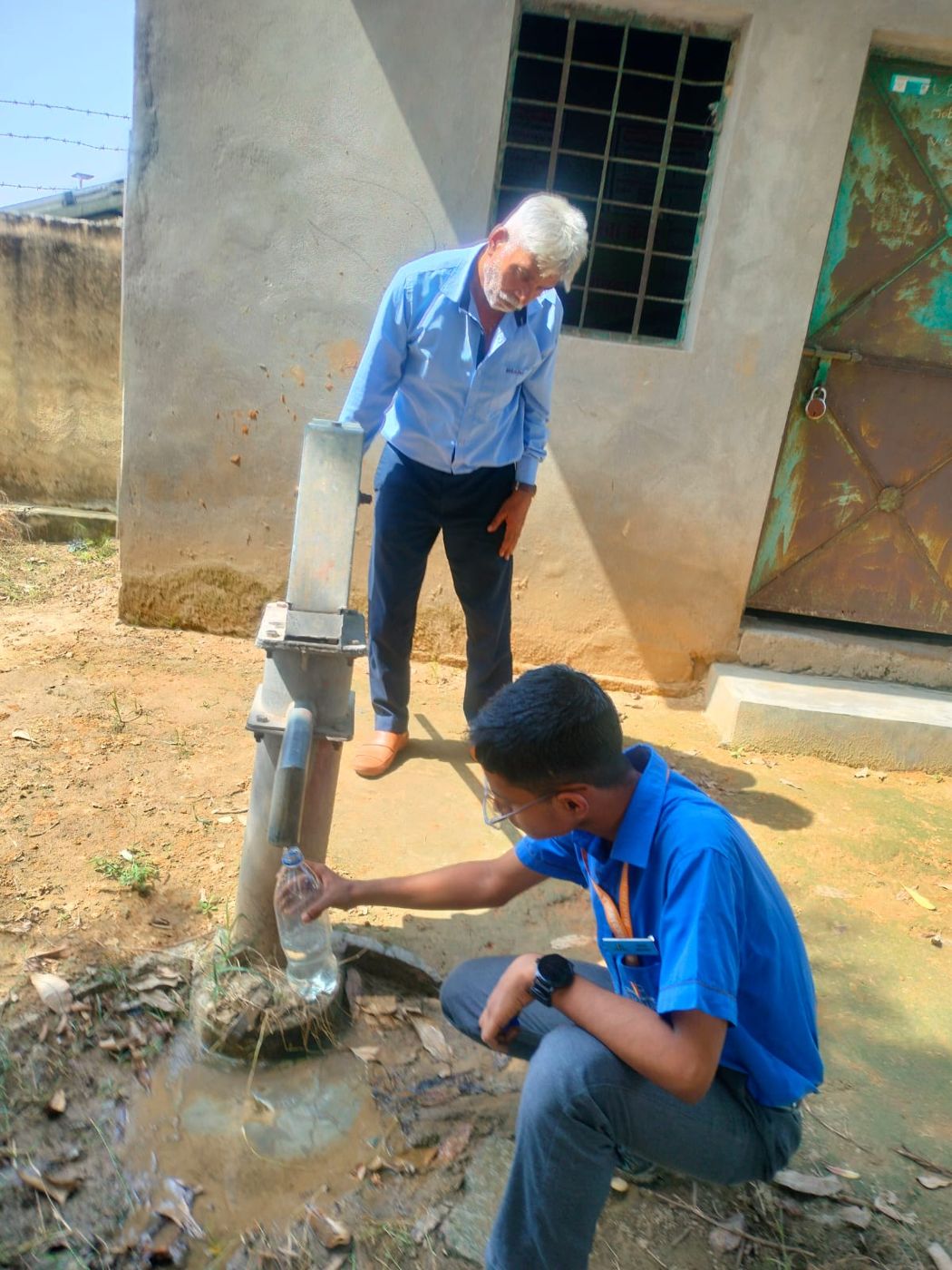
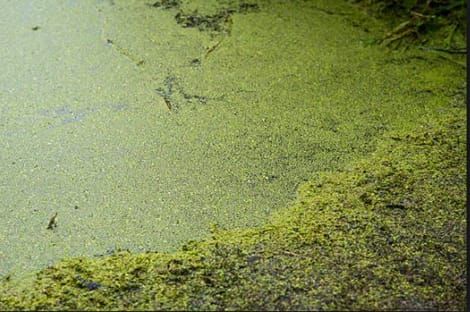
Children drink from those hand pumps before school. We collected that water and had it tested. It came back with sulphate, lead, pesticide and insecticide in it. The pond had turned green and the fish were gone.
The wetland
The wetland.
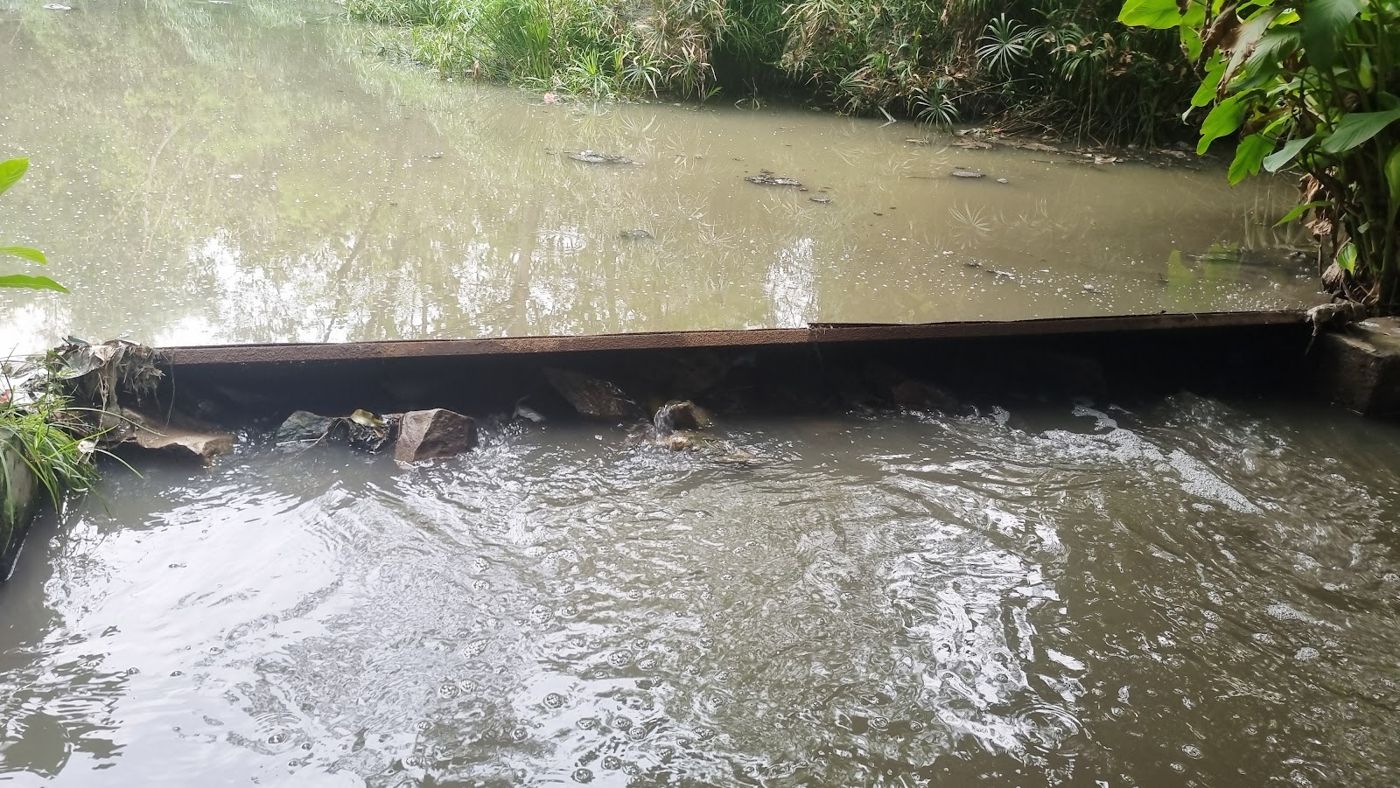
Constructed wetlands are the affordable answer, and the government is already building them. Plants, gravel and bacteria clean water with no electricity at all. But a wetland only does half the job.
The wetland design is the work of CEMDE, University of Delhi. Our part is the stage that comes after it.
The gap
What the wetland misses.
Phosphorus
Feeds algae until ponds turn green.
Ammonia in winter
The wetland's bacteria slow down in the cold.
Heavy metals
Stored in the mud, not removed, and rain can wash them out again.
Pesticides and medicines
Pass straight through.
Bed one
Bed one — zeolite.
Soaks up ammonia. It works by chemistry, not bacteria, so it keeps going through winter.
Bed two
Bed two — ferric oxide.
Just rust. It holds on to phosphorus, arsenic and lead, and when the bed is swapped out those metals leave the site instead of building up in the mud.
Bed three
Bed three — biochar with titanium dioxide.
Charcoal full of holes too small to see, which traps pesticides and medicine residues.
The beds are raised and open to the sky. We believe sunlight falling on the titanium dioxide breaks apart what the charcoal has trapped, so the bed cleans itself instead of becoming someone else’s waste.
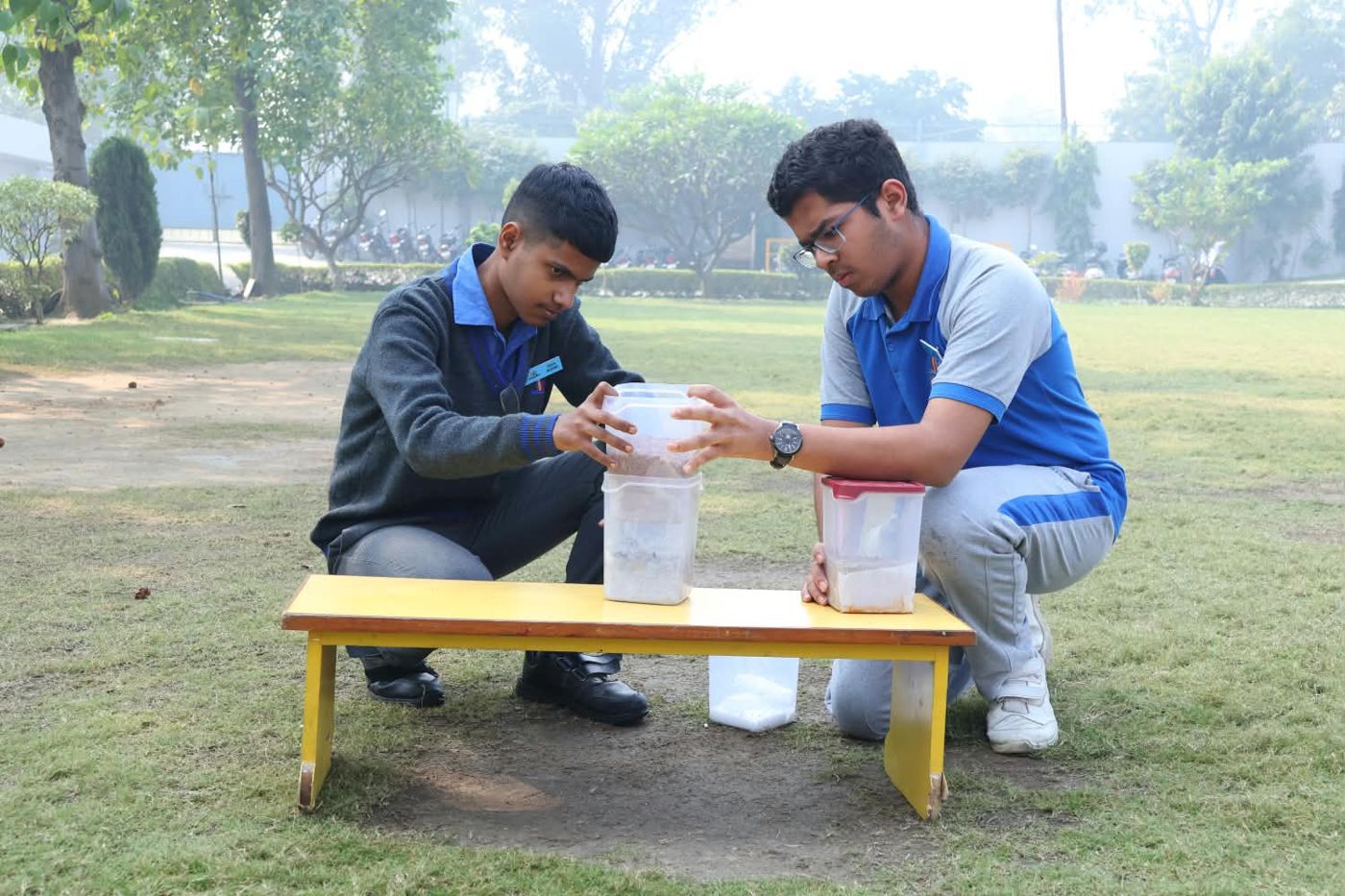
That is still a hypothesis. We are testing it now, with sun-exposed beds against identical beds kept in the dark.
Clean water out
Clean water out.
This is the stage that catches what the wetland misses.
Walk through it yourself
Try the simulator.
Open in a new tabDrag to look around, scroll to zoom, W and S to move along the drain.
In our own words
Watch it.
Taking it to the experts
What a wetland scientist wrote to us.
Written feedback
Inspiring Young Minds Through Nature-Based Solutions
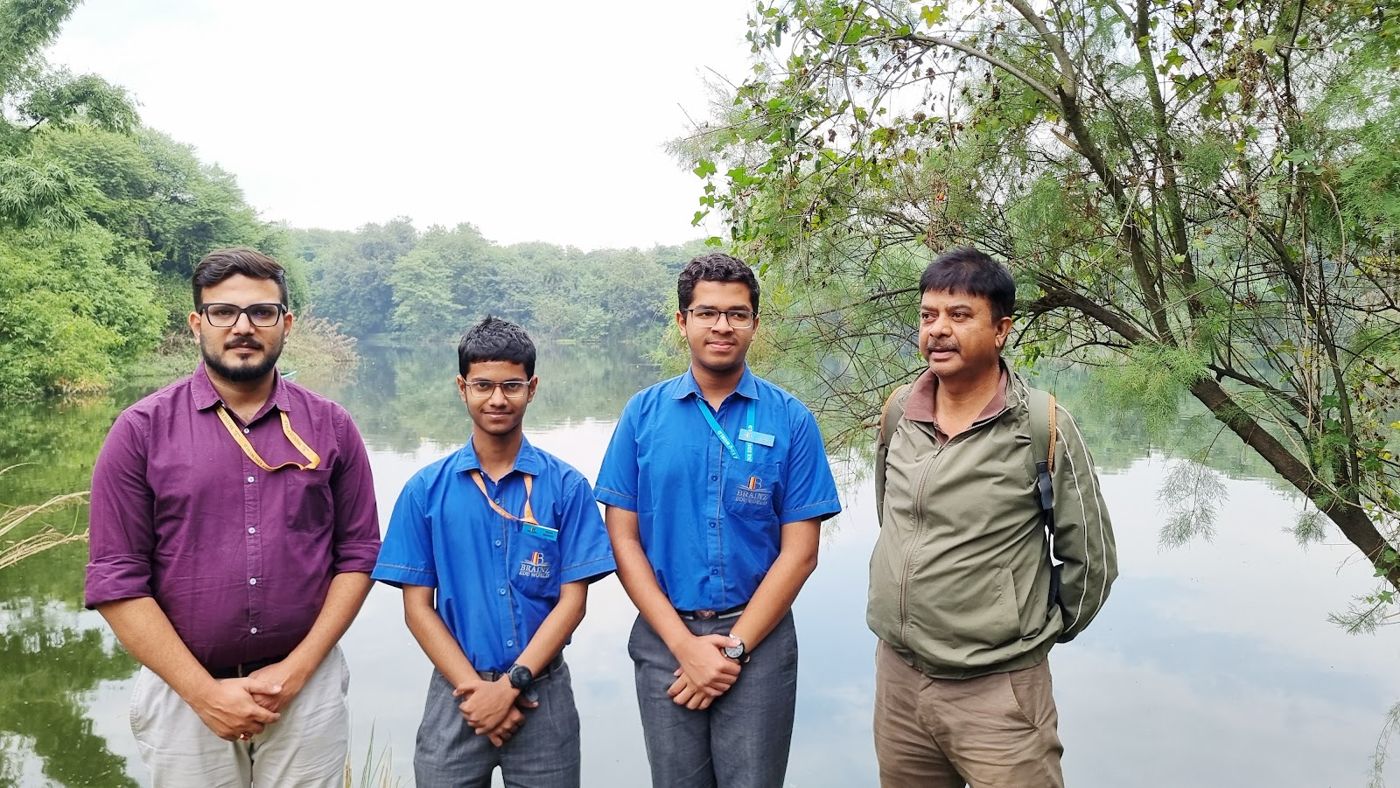
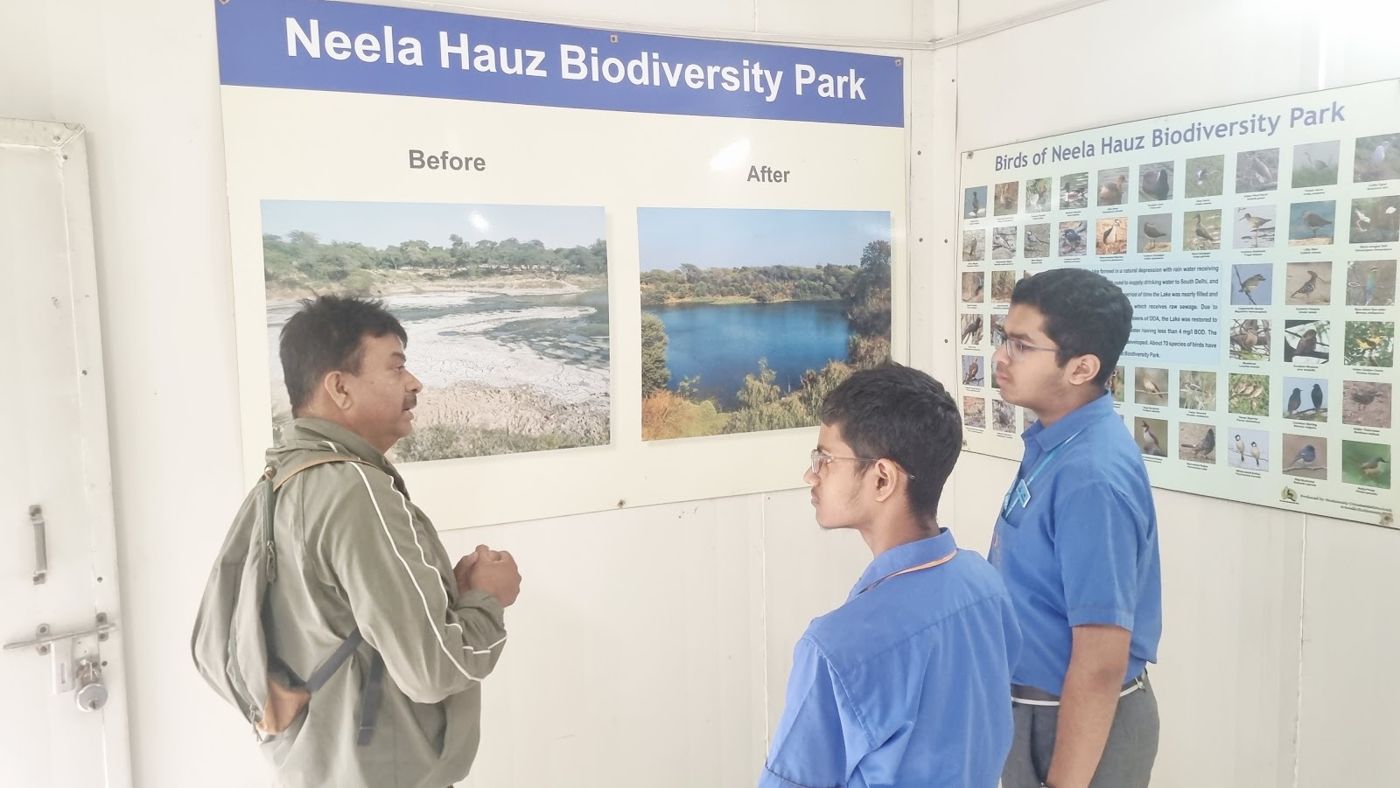
Two talented Class XI students, Teerthoraj Chatterjee and Vedant Agrawal, accompanied by their mentor, Mr. Vivek Bhardwaj of Brainz Edu World, Meerut, visited Neela Hauz Biodiversity Park to learn about nature-based solutions for sewage water treatment.
During their visit, both students showed remarkable curiosity and a keen interest in understanding the Constructed Wetland System (CWS). Their thoughtful questions reflected their understanding of the system and their genuine enthusiasm for exploring practical, nature-based approaches to water treatment.
I explained how they could replicate a similar system on a smaller drain in Meerut, monitor its performance, and evaluate its effectiveness in improving water quality. We also discussed the possibility of conducting further experiments by incorporating a charcoal layer at the final stage of filtration to study its impact on various water quality parameters.
It was encouraging to interact with such bright young minds who are eager to connect scientific knowledge with practical environmental solutions. With the right guidance and experimentation, students like them can play a meaningful role in promoting sustainable water management and environmental conservation.
Yasir Arafat
Scientist-B, Biodiversity Parks Programme
CEMDE, University of Delhi
“This is the first idea anyone has brought us that protects the health of the village without asking a farmer to risk his harvest.”
Along the way
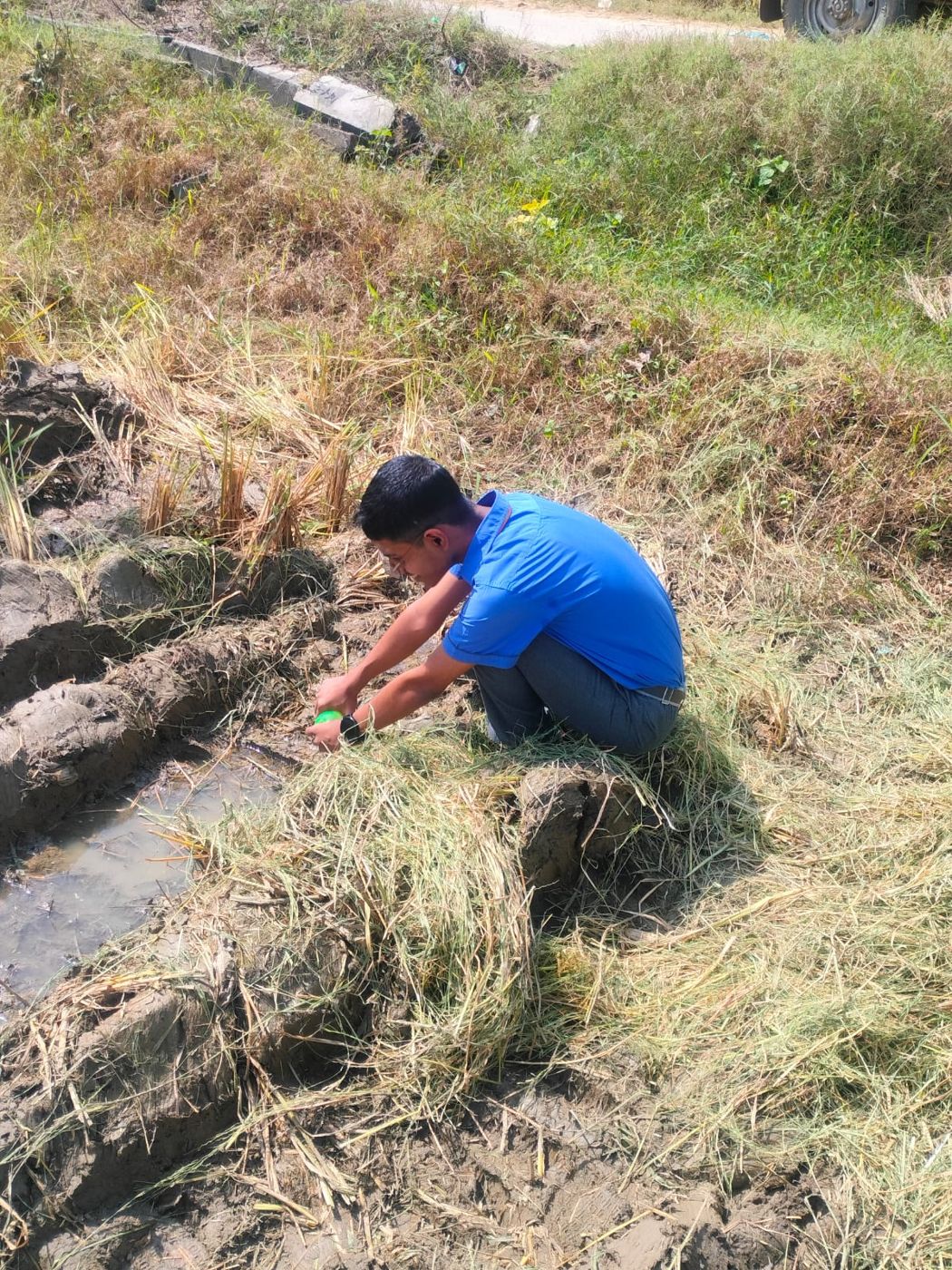
Collecting field runoff 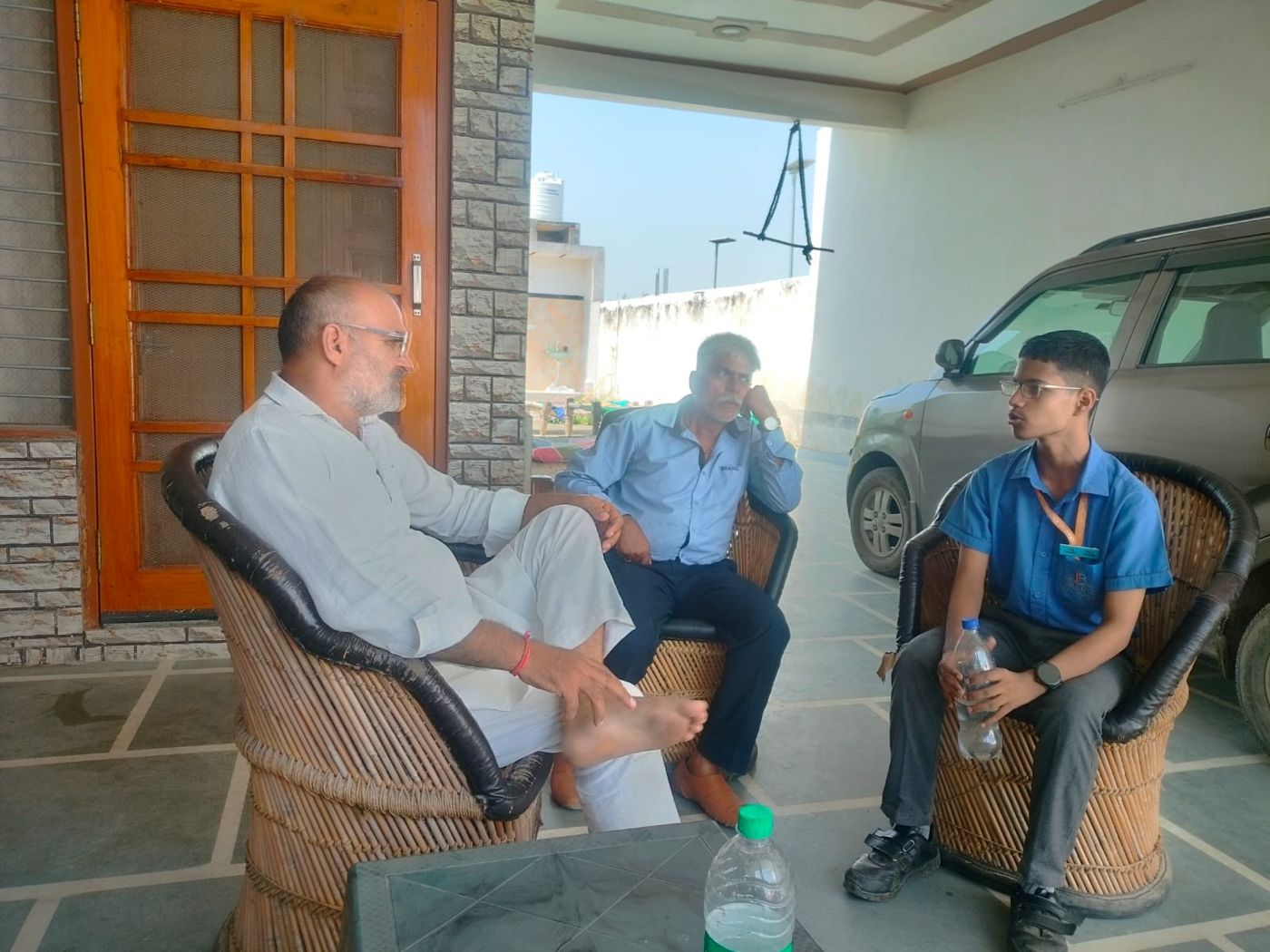
Talking with people in Chhilora 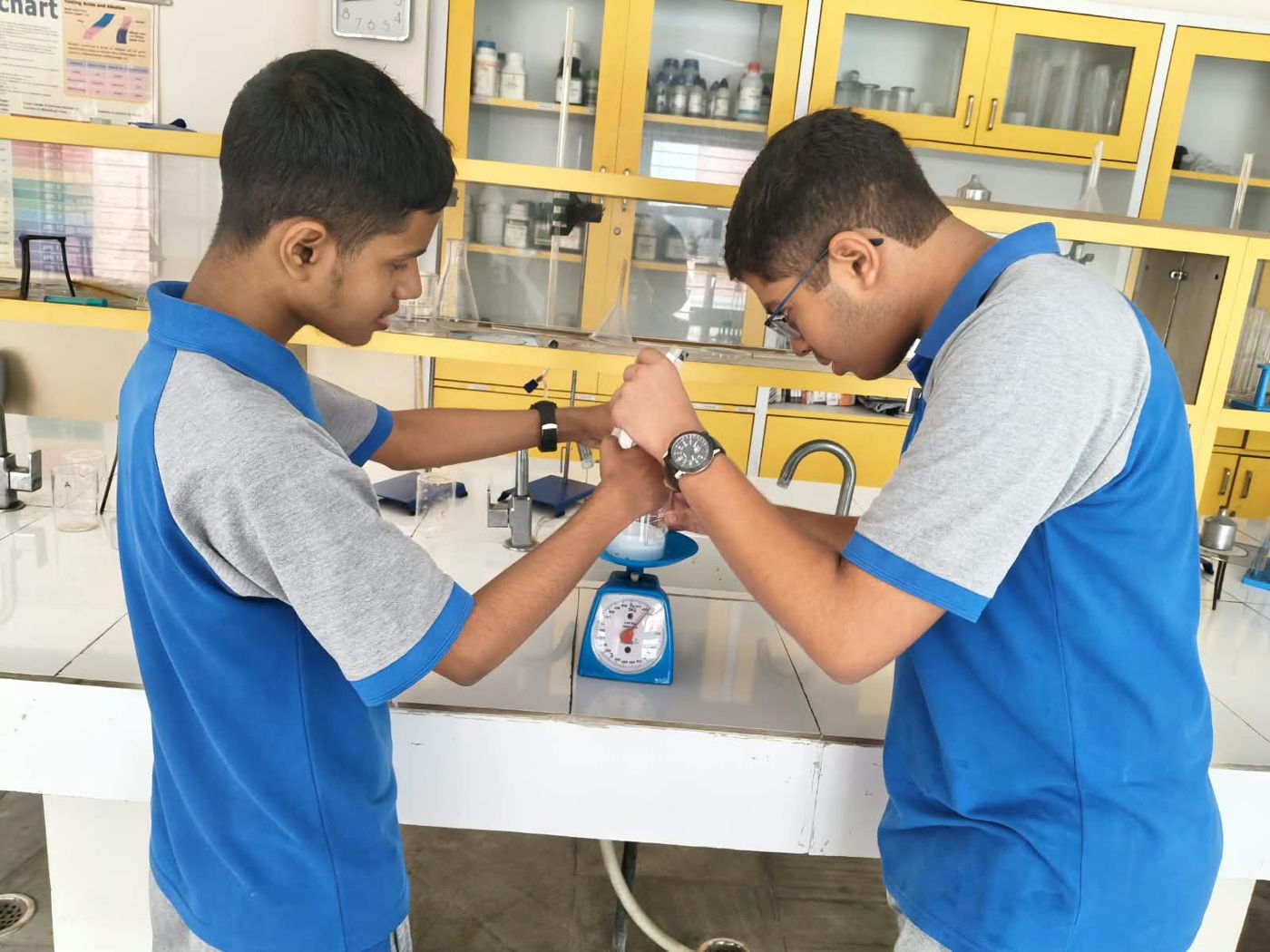
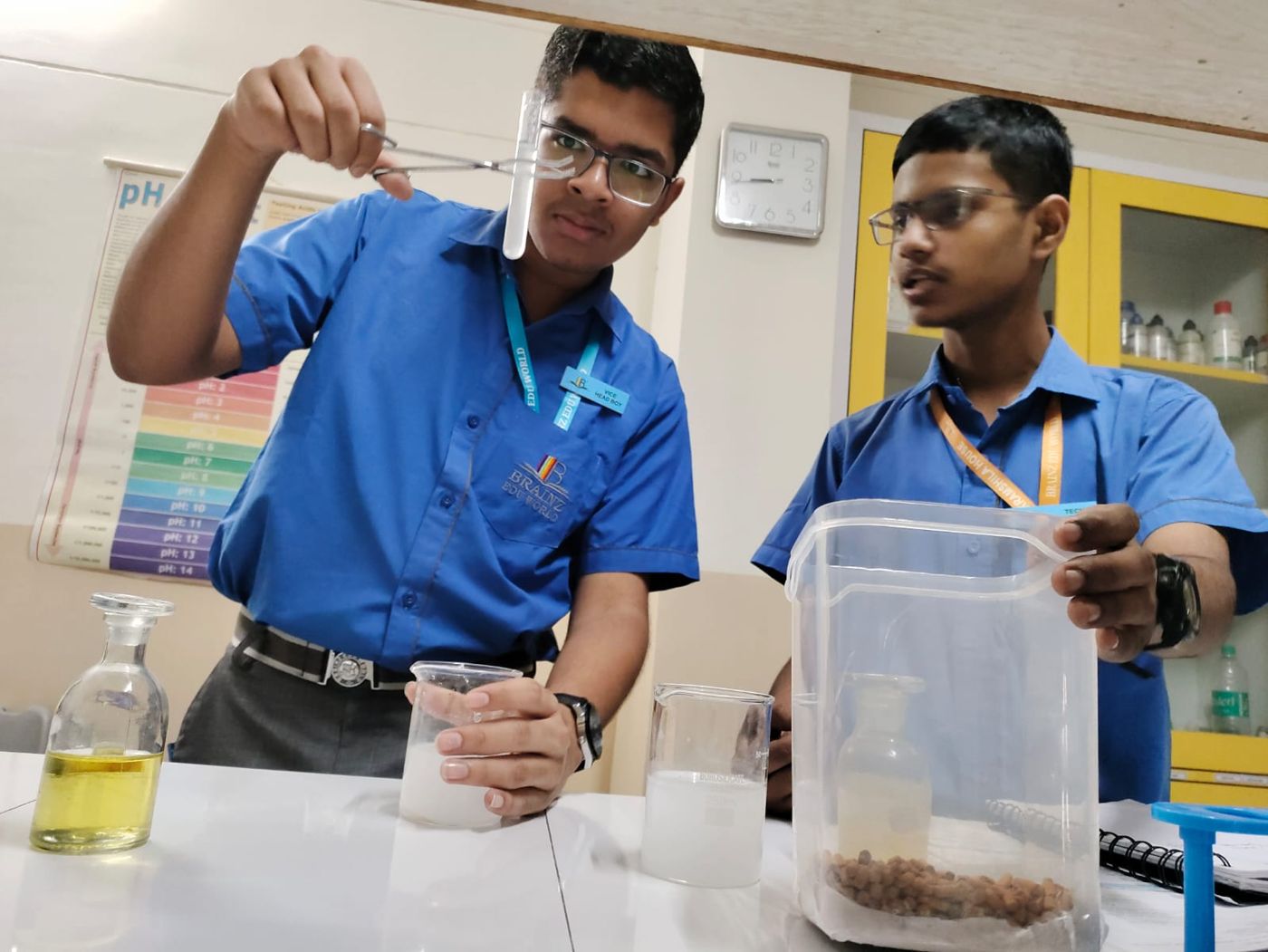
Weighing filter media 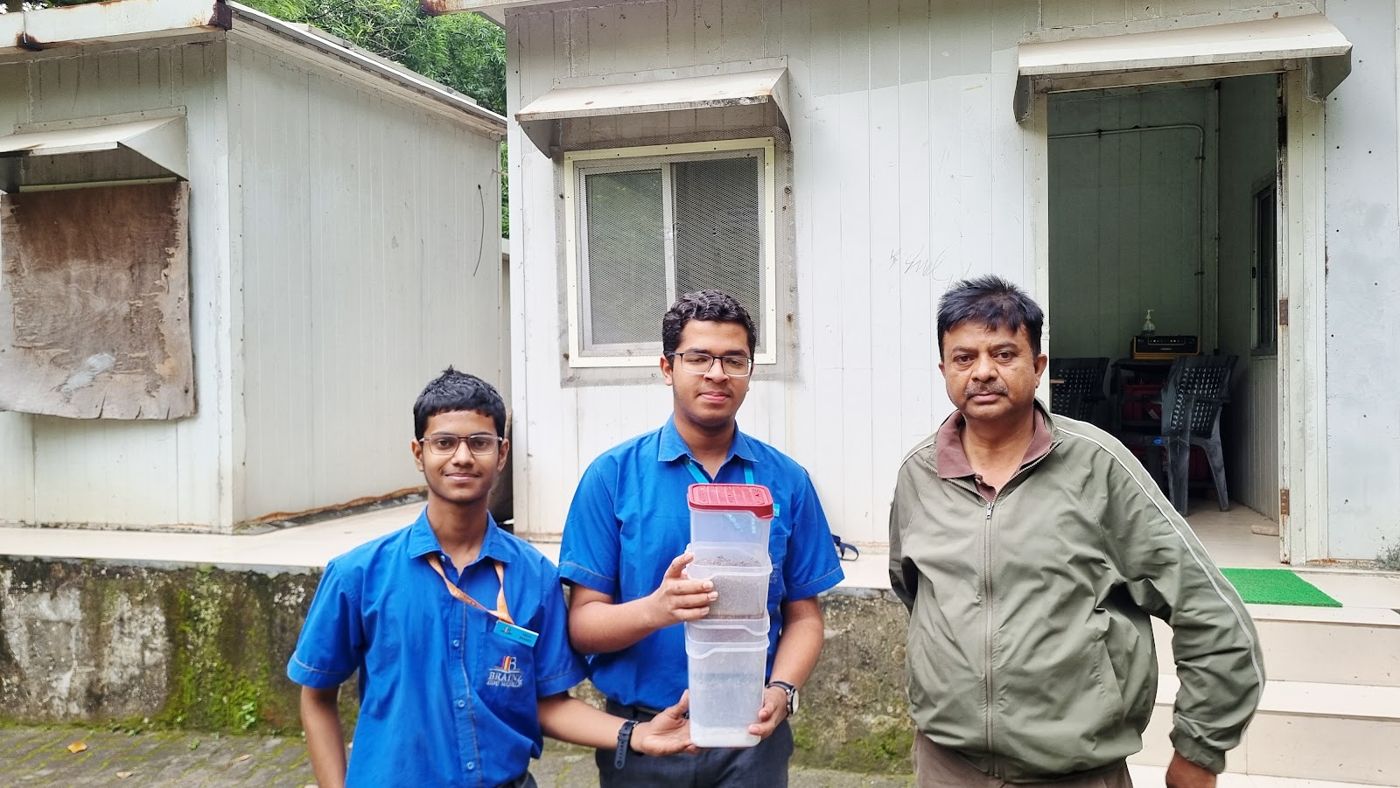
Showing the column to scientists 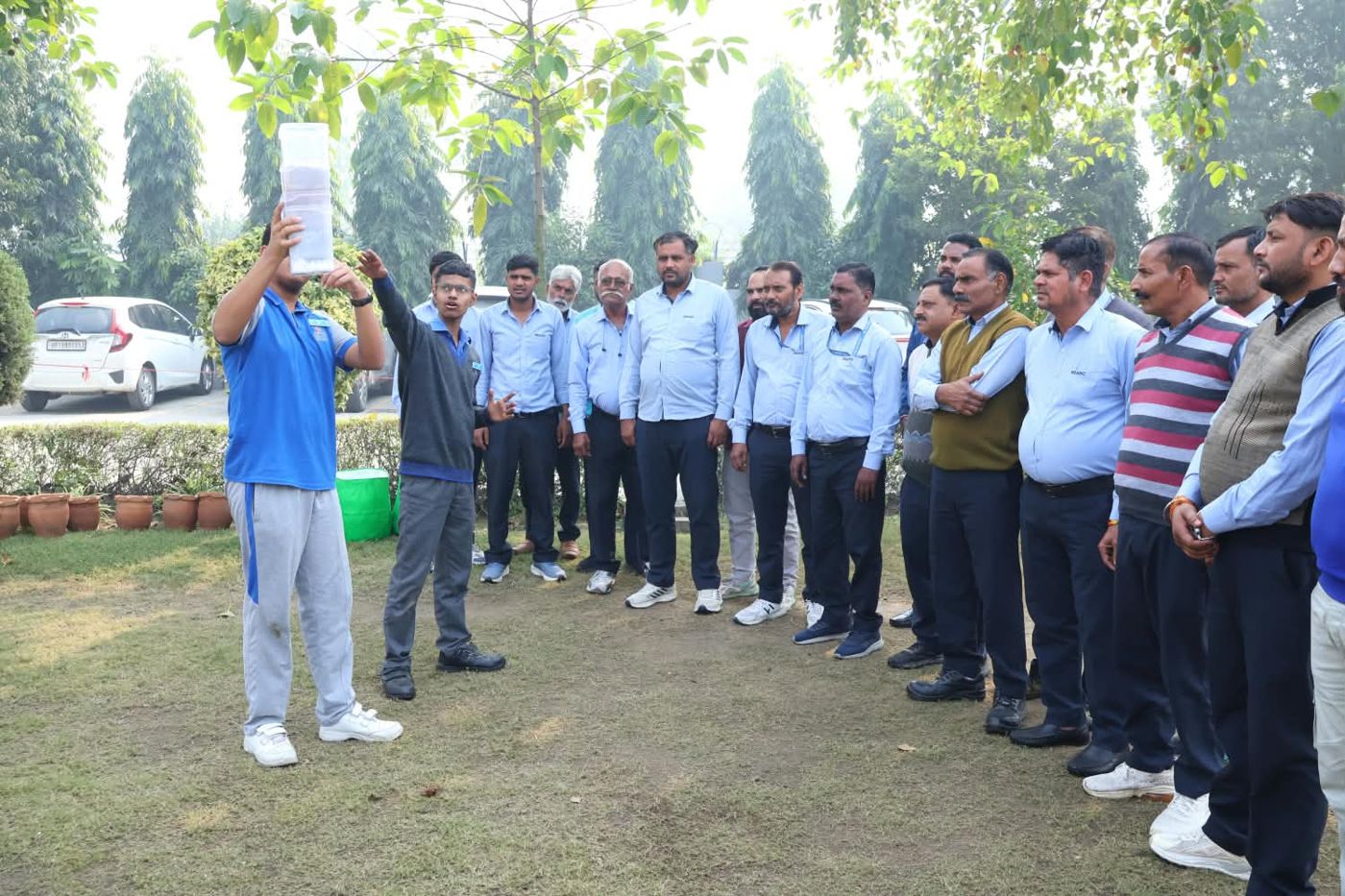
A demonstration for visitors
Your turn
Tell us what you think.
We’re two students still building and testing this. Honest doubts help us more than compliments.